You follow a recipe exactly, but something’s missing. The dish tastes…fine, but not special. That frustrating gap between “okay” and “wow” usually comes down to one thing: balance.
The Real Reason Some Dishes Taste “Flat”
Restaurant food often tastes better because chefs constantly adjust flavor. They don’t just follow a recipe; they taste, tweak, and rebalance. You can do the same at home once you understand four key elements:
- Salt – wakes everything up
- Acid – adds brightness and contrast
- Fat – carries flavor and richness
- Sweet – rounds out sharp edges and bitterness
Let’s turn your kitchen into a flavor lab. You’ll learn how each element works, how to fix common seasoning problems, and get two detailed recipes designed for practice—with tasting checkpoints built in.
Salt: The Amplifier
Salt doesn’t just make food taste salty—it makes it taste more like itself. Tomatoes taste more tomato-y, potatoes taste more potato-y.
How to Use Salt Better
- Season early and in layers: meat before searing, veggies as they cook, sauces as they reduce.
- Taste before adding more: let salt dissolve and mingle, then re-taste.
Quick Practice: Perfectly Seasoned Roasted Potatoes
Ingredients (Serves 3–4)
- 1½ lbs baby potatoes, halved
- 2 tbsp olive oil
- 1 tsp kosher salt
- ½ tsp black pepper
- 1 tsp garlic powder or 2 cloves minced garlic
- 1 tsp chopped fresh rosemary (optional)
Instructions
- Preheat oven to 425°F (220°C).
- Toss potatoes with oil, salt, pepper, garlic, and rosemary.
- Spread in a single layer on a baking sheet.
- Roast 25–30 minutes, flipping once, until golden and crisp.
- Taste one. Ask: does this taste fully alive? If not, sprinkle a pinch of salt over the finished potatoes and taste again.
Chef Tip: Unsure if you need more salt? Take a small bite and add a tiny sprinkle directly to that bite only. If that bit tastes better, your whole dish needs more salt.
Acid: The Brightener
Acid is the squeeze of lemon that wakes up grilled fish, the vinegar that makes salads pop, the tomatoes that balance rich stews. Without acid, food can taste heavy or dull.
Acid All-Stars
- Citrus: lemon, lime, orange
- Vinegars: red wine, white wine, rice, sherry, balsamic
- Ferments: yogurt, buttermilk, sour cream, pickles
- Ingredients: tomatoes, wine, mustards
Quick Practice: Lemon-Boosted Vegetable Soup
Take a simple vegetable or chicken soup you already make. At the end, before serving:
- Taste a spoonful.
- Add a squeeze of lemon or a splash of vinegar.
- Taste again.
You’ll notice the flavors feel clearer and more defined.
Chef Tip: Add acid at the end of cooking to keep its brightness.
Fat: The Carrier
Fat brings richness, silkiness, and that satisfying mouthfeel. It carries aromatics and fat-soluble flavors (like herbs and spices) across your palate.
Where Fat Comes From
- Oils and butter
- Cream, cheese, yogurt
- Nuts and seeds
- Fatty cuts of meat, egg yolks, avocado
- Sauté aromatics in oil or butter to fully release their flavor
- Add a little fat at the end (butter in sauces, olive oil on soup) for luxurious texture
Using Fat Wisely
Chef Tip: Too much fat without balance = heavy. That’s where acid steps in.
Sweet: The Softener
Sugar isn’t just for dessert. A touch of sweetness can:
- Balance acidity in tomato sauces
- Tame bitterness in greens
- Round out harsh spices
- Honey, maple syrup
- Caramelized onions
- Roasted root vegetables (carrots, sweet potatoes, beets)
- Mirin or a splash of orange juice
Gentle Sweetness Sources
Chef Tip: You should rarely taste dessert-level sweetness in savory dishes—use just enough to soften edges, not to steal the spotlight.
Bringing It Together: Flavor Balancing in Action
Let’s cook a dish where you intentionally practice balancing salt, acid, fat, and sweet.
Recipe 1: Bright & Creamy Tomato Basil Pasta
Ingredients (Serves 3–4)
- 8 oz pasta (penne, fusilli, or spaghetti)
- 2 tbsp olive oil
- 1 small onion, finely chopped
- 3 cloves garlic, minced
- 1 can (14–15 oz) crushed tomatoes
- ½ tsp sugar (to start)
- ½ tsp kosher salt (to start)
- ¼ tsp black pepper
- ¼–½ cup heavy cream or half-and-half
- ½ cup grated parmesan cheese
- Handful fresh basil leaves, torn
- Optional: pinch red pepper flakes
Instructions with Tasting Checkpoints
Cook pasta
Boil in well-salted water until al dente. Reserve ½ cup pasta water.
Build your base (fat + aromatics)
Heat olive oil in a large skillet over medium. Add onion and a pinch of salt; cook until soft, 5–7 minutes. Add garlic and cook 30–60 seconds.
Add tomatoes
Pour in crushed tomatoes. Add sugar, salt, pepper, and red pepper flakes if using. Simmer 10 minutes.
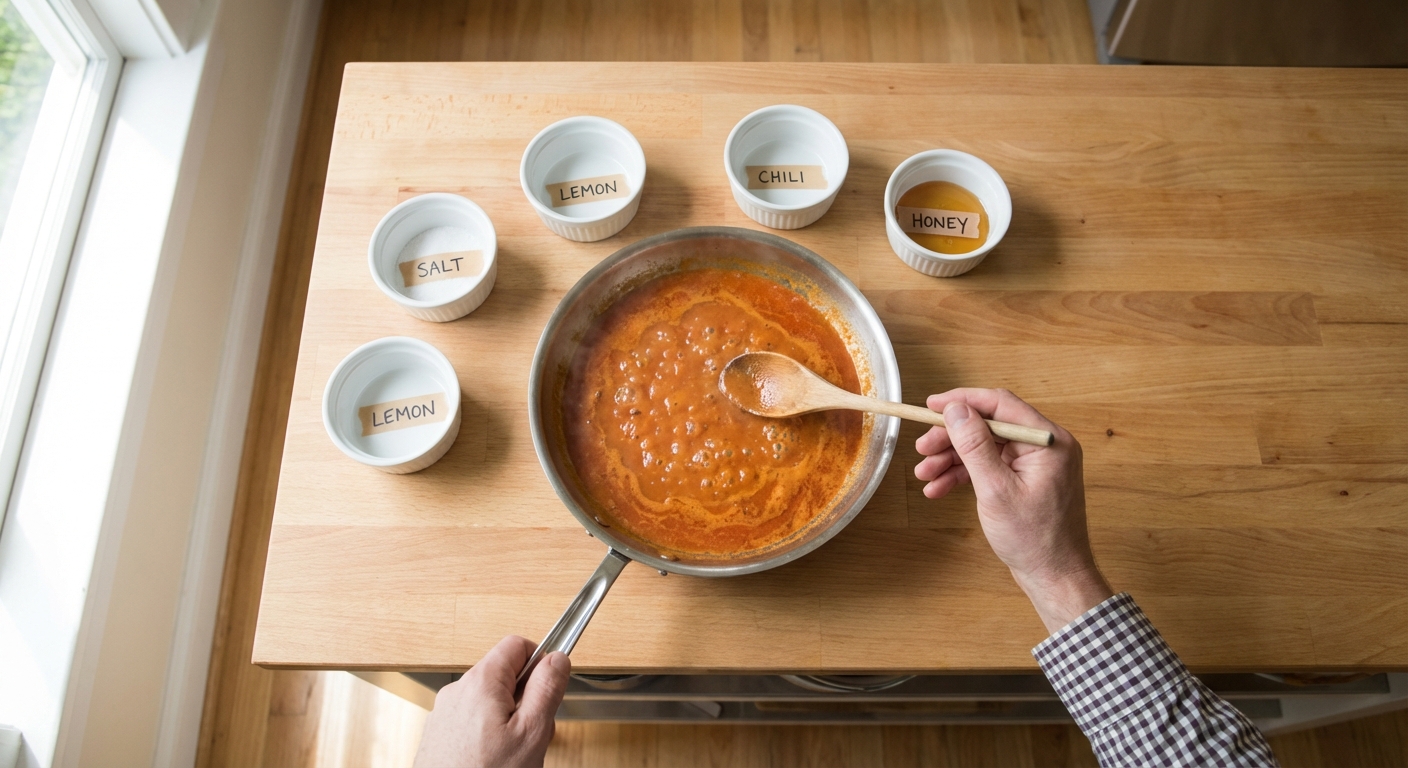
Taste #1: Salt & Sweet Check
- Does it taste flat? Add a pinch of salt. - Too sharp/acidic? Add another tiny pinch of sugar. Stir and simmer 2 more minutes.
Add cream (fat)
Stir in ¼ cup cream. Simmer 2–3 minutes. Add more if you want it richer.
Taste #2: Balance Check
Ask yourself: - Is it pleasantly rich? - Do the flavors feel bright enough or a bit heavy?
If heavy, add a splash of pasta water and a tiny squeeze of lemon (yes, in tomato sauce—it works) to brighten.
Add pasta & cheese
Toss pasta in the sauce with parmesan. Add a little pasta water if it seems too thick.
Finish with acid and herbs
Turn off heat. Stir in basil and taste again. You want a balance of richness (cream, cheese, oil), brightness (tomatoes, maybe lemon), and savoriness (salt, parmesan).
Flavor Pairings:
- Serve with a simple arugula salad dressed in lemon and olive oil
- Pair with garlicky bread to echo flavors
Recipe 2: Honey-Lime Sheet Pan Chicken with Roasted Vegetables
This recipe is built specifically around salt, acid, fat, and sweet.
Ingredients (Serves 4)
For the chicken & marinade
- 4 boneless, skinless chicken thighs or breasts
- 2 tbsp olive oil
- Zest and juice of 2 limes
- 2 tbsp honey
- 2 cloves garlic, minced
- 1 tsp chili powder
- 1 tsp kosher salt
- ½ tsp black pepper
- 1 red bell pepper, sliced
- 1 zucchini, sliced into half-moons
- 1 red onion, wedges
- 2 cups broccoli florets
- 2 tbsp olive oil
- 1 tsp kosher salt
- ½ tsp pepper
- Fresh cilantro or parsley
- Lime wedges
For the veggies
Finishers
Instructions with Flavor Lessons
Marinate (acid + sweet + salt + fat)
In a bowl, whisk olive oil, lime zest and juice, honey, garlic, chili powder, salt, and pepper. Add chicken and marinate 20–30 minutes.
Prep veggies
Toss bell pepper, zucchini, onion, and broccoli with olive oil, salt, and pepper on a sheet pan.
Add chicken
Push veggies to the sides and lay marinated chicken in the center. Pour any extra marinade over chicken only.
Roast
Cook at 425°F (220°C) for 18–22 minutes, until chicken is done and veggies are tender.
Taste the veggies
Try a piece of broccoli. Ask: - Enough salt? - Want a touch more brightness?
If yes, squeeze a little lime over the entire tray.
Taste the chicken
Slice a small piece. Consider: - Is the sweet/sour balance pleasant? If too sweet, add more lime juice at the table. If too sharp, serve with a dollop of plain yogurt or drizzle of olive oil.
Finish and serve
Sprinkle with chopped cilantro or parsley. Serve with rice, quinoa, or warm tortillas.
Flavor Breakdown:
- Salt – in both marinade and veggie seasoning
- Acid – lime juice and zest
- Fat – olive oil and chicken’s natural fat
- Sweet – honey to soften the lime and chili
How to “Diagnose” Your Dish in 30 Seconds
When something tastes off, run through this mental checklist:
Does it taste flat or dull?
→ Add a pinch of salt. Taste again.
Still heavy or muddy?
→ Add a small splash of acid (lemon, vinegar, or tomato).
Too sharp, sour, or bitter?
→ Add a touch of sweetness (honey, sugar, caramelized onion) or a bit of fat (butter, cream, olive oil).
Too rich or fatty?
→ Add more acid, maybe fresh herbs.
Everything there but missing excitement?
→ Add a crack of black pepper, pinch of chili flakes, or fresh herbs.
Simple Everyday Flavor Boosters to Keep on Hand
Stock these and you’ll always have options for last-minute balance:
- Salt: kosher salt, flaky finishing salt
- Acid: lemons, limes, red wine vinegar, rice vinegar
- Sweet: honey, maple syrup, a small jar of sugar
- Fat: good olive oil, butter
- Extras: Dijon mustard, plain yogurt, parmesan, fresh herbs
Turn Every Recipe into Your Recipe
Once you start tasting actively and thinking in salt–acid–fat–sweet, recipes become guidelines, not restraints. You’ll know how to:
- Save a dull soup with lemon and salt
- Balance a too-tangy tomato sauce with a pinch of sugar and butter
- Brighten heavy stews with a splash of vinegar at the end
- Make vegetables irresistible with generous seasoning and a squeeze of citrus
Tonight, pick one dish you make regularly—pasta sauce, soup, stir-fry—and do three extra tastings as it cooks. Ask your palate what it wants, then answer with salt, acid, fat, or sweet.
That’s how home cooks become intuitive cooks, one delicious adjustment at a time.
Key Takeaway
The most important thing to remember from this article is that this information can change how you think about Kitchen Tips.