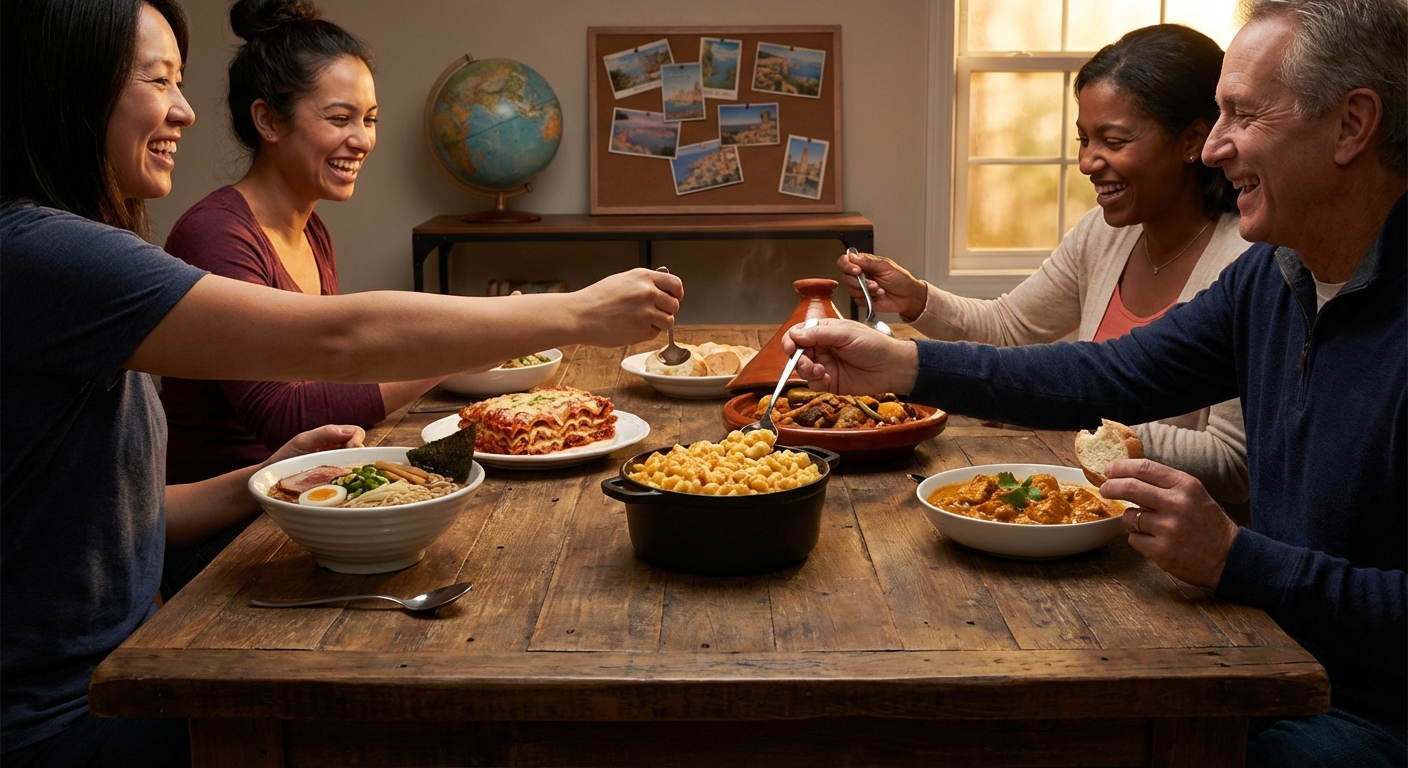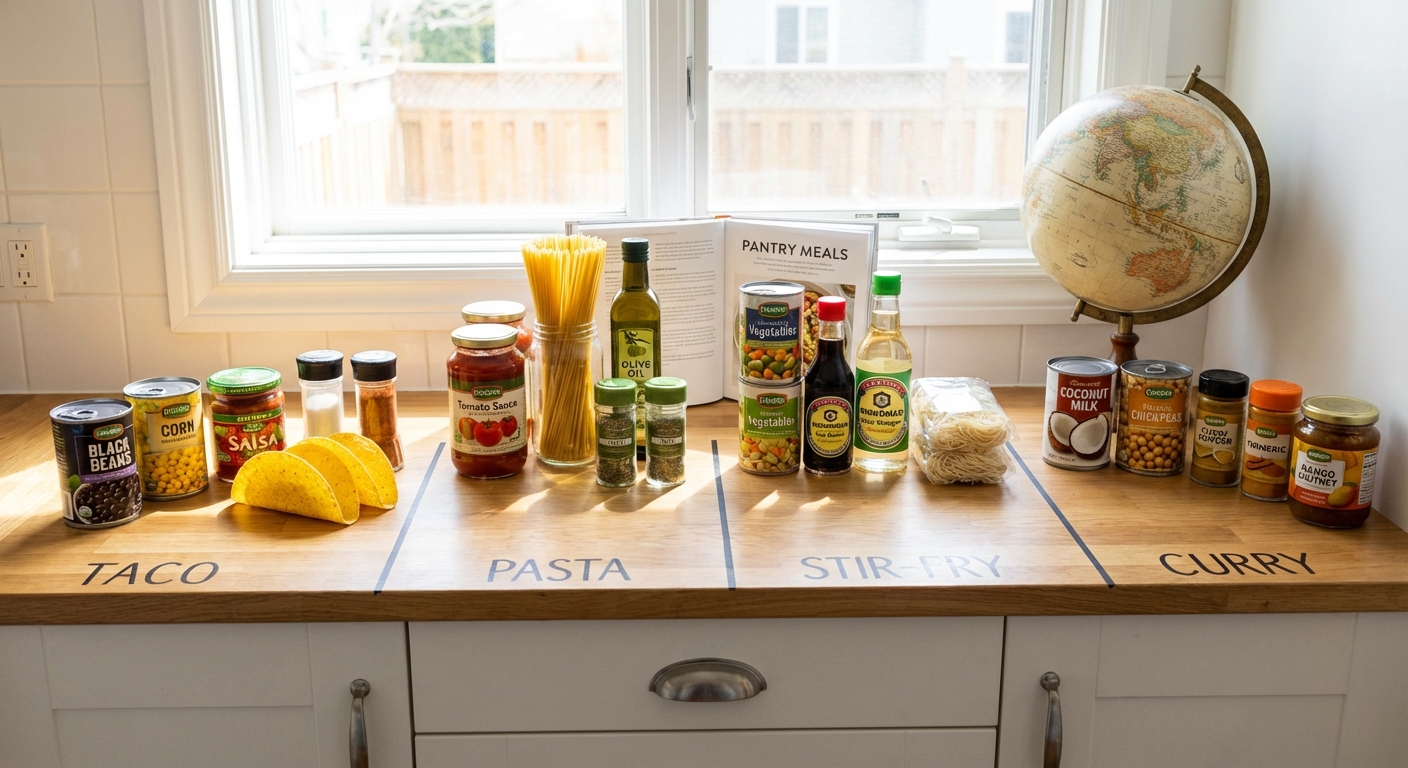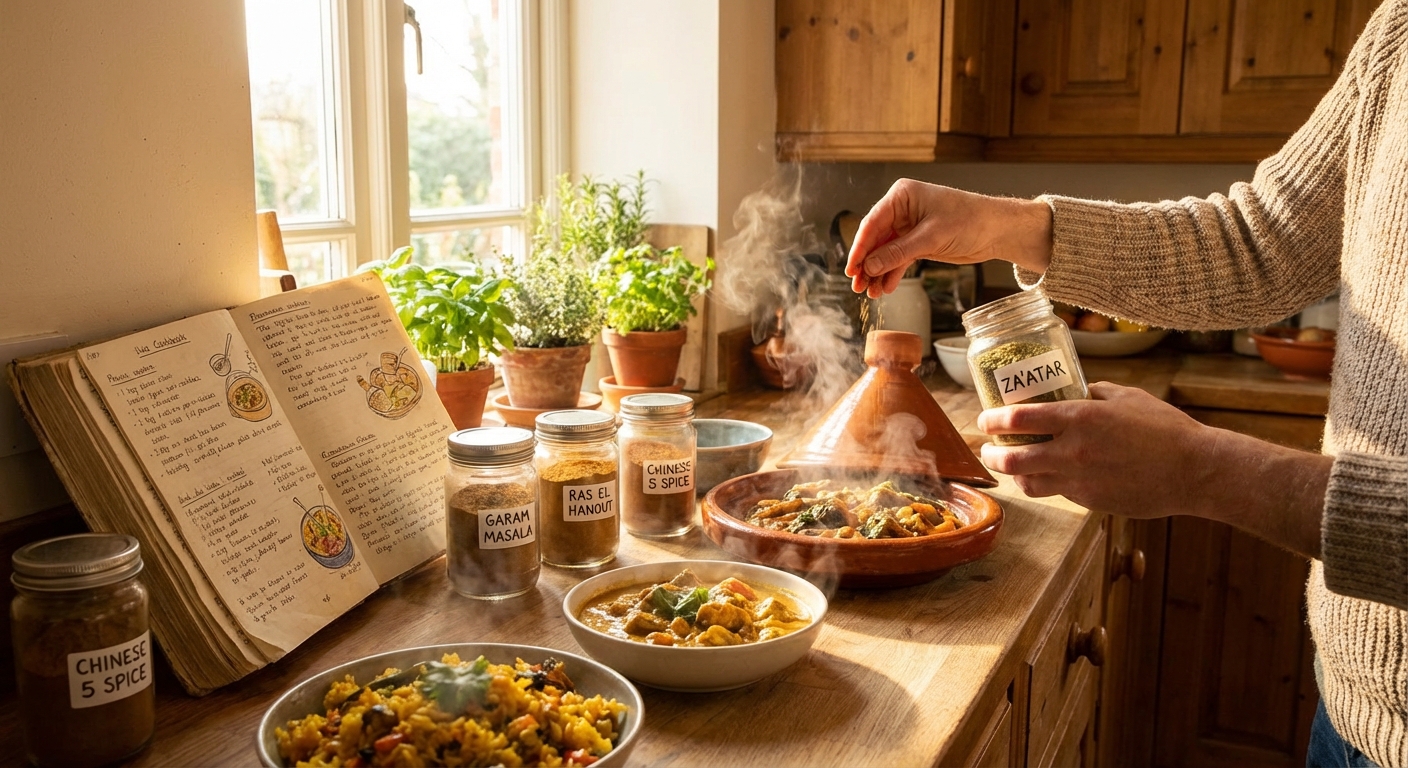
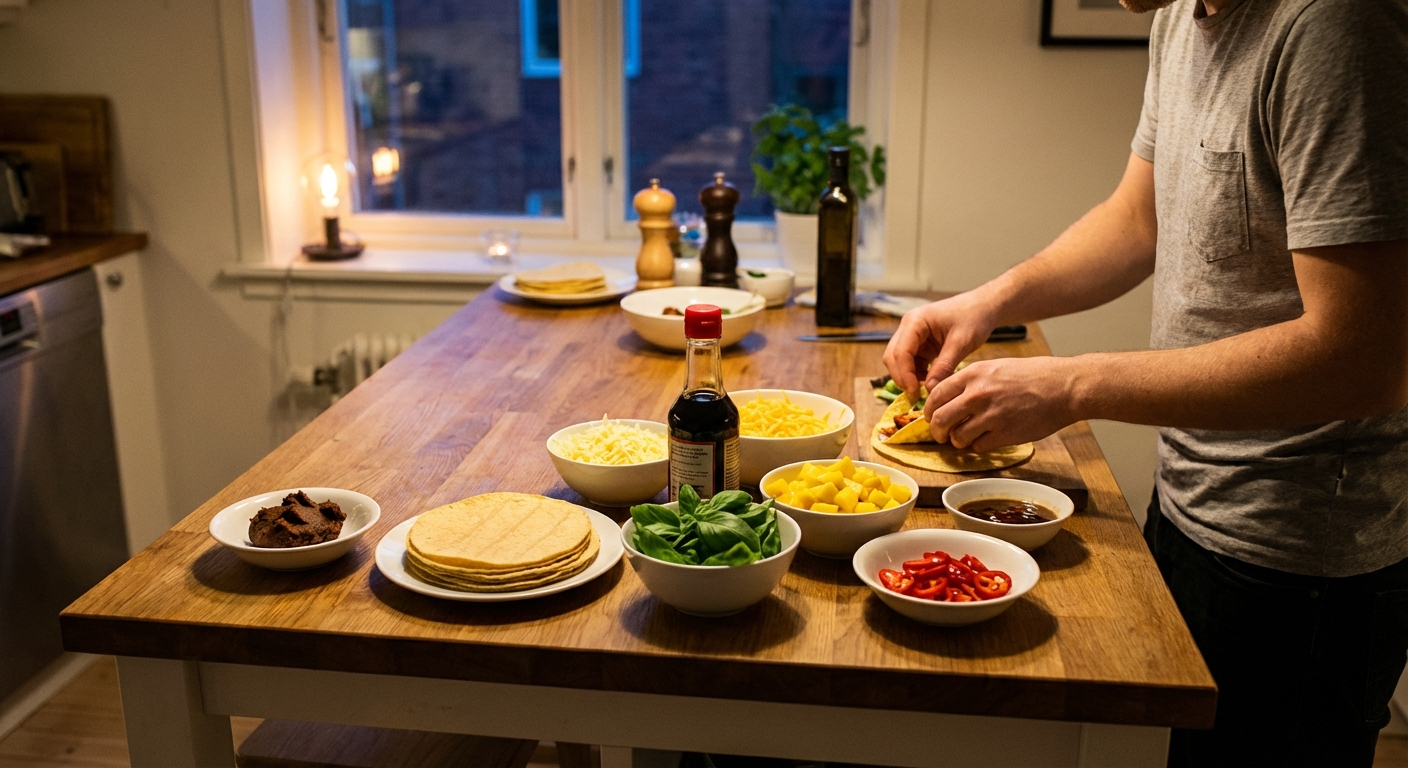
Fusion can be magical—or a disaster. The key difference is understanding flavor bridges: ingredients, textures, and techniques that different cultures share. Once you learn these connections, you can confidently pair soy sauce with Parmesan, or miso with maple, and build globally inspired meals that make sense on the palate.
The Secret to Mixing Cuisines Without Making a Mess
This guide walks you through three flexible, mix-and-match recipe "frameworks" you can adapt to any international cuisine:
A customizable grain bowl
A global sheet pan dinner
A versatile soup-stew hybrid
You’ll get ingredient ideas, step-by-step instructions, and flavor-pairing suggestions so your experiments feel intentional—not random.
Step 1: Learn the Four Building Blocks
Before we cook, let’s define the four parts almost every cuisine balances:
- Base – grains, noodles, bread, or starchy vegetables.
- Protein – meat, seafood, tofu, beans, eggs.
- Vegetables – freshness, color, and texture.
- Flavor Pack – sauces, herbs, spices, acids, and fats that define a cuisine.
When you mix cuisines, keep three blocks familiar and experiment with the Flavor Pack.
Framework 1: Global Grain Bowls
Grain bowls are the perfect playground for international cuisine—they’re structured, but endlessly adaptable.
Step A: Choose Your Grain Base
Pick one (about 1 cup cooked per person):
- Japanese: short-grain rice
- Mexican: cilantro-lime rice or quinoa
- Middle Eastern: bulgur or couscous
- Mediterranean: farro or orzo
Cook according to package instructions with a pinch of salt. For extra flavor, cook in stock instead of water.
Step B: Pick a Protein
Aim for 4–6 oz per person:
- Japanese-style: soy-ginger chicken or tofu
- Greek-style: lemon-oregano chicken or chickpeas
- Korean-style: gochujang-marinated beef or mushrooms
- Indian-style: tandoori-spiced shrimp or paneer
Example: Soy-Ginger Chicken (Great with Many Cuisines)
Ingredients (Serves 4)
- 1 ½ lbs boneless chicken thighs
- 3 tbsp soy sauce
- 1 tbsp honey or brown sugar
- 1 tbsp rice vinegar or lime juice
- 1 tbsp grated ginger
- 1 clove garlic, minced
- 1 tbsp neutral oil
Instructions
- Mix soy, honey, vinegar, ginger, and garlic.
- Marinate chicken 20–30 minutes.
- Heat oil in a skillet over medium-high; cook chicken 5–6 minutes per side until browned and cooked through.
- Rest 5 minutes, slice.
Step C: Add Vegetables (Raw + Cooked)
Combine at least one fresh and one roasted/sautéed element:
- Fresh: cucumber, cherry tomatoes, shredded cabbage, grated carrots, radishes, herbs.
- Cooked: roasted sweet potatoes, sautéed greens, blistered peppers, grilled zucchini.
Step D: Choose Your Flavor Pack (Sauce + Garnish)
Here’s where you play with international cuisine.
Japanese-Inspired Bowl
- Sauce: 2 tbsp soy sauce, 1 tbsp rice vinegar, 1 tsp sesame oil, 1 tsp honey, 1 tsp grated ginger.
- Garnish: sliced scallions, nori strips, toasted sesame seeds.
- Sauce: Greek yogurt, lemon juice, garlic, olive oil, salt, pepper.
- Garnish: feta, dill, cucumber, olives.
- Sauce: lime crema (sour cream + lime juice + pinch of salt).
- Garnish: cilantro, pickled onions, sliced jalapeños.
- Use one primary cuisine and one accent. For example, a Japanese bowl with a hint of Mexican (lime and cilantro garnish), not both at equal intensity.
- Repeat at least one ingredient in the marinade and sauce (e.g., soy in both) to create cohesion.
Mediterranean-Inspired Bowl
Mexican-Inspired Bowl
Chef Tips for Successful Fusion Bowls
Framework 2: International Sheet Pan Suppers
Sheet pan dinners are a weeknight hero; bringing international flavors to them takes them from basic to unforgettable.
Base Formula
- 1–1 ½ lbs protein
- 3–4 cups mixed vegetables
- 2–3 tbsp fat (oil, melted butter, ghee)
- 2–3 tbsp seasoning mix or marinade
Roast at 400°F (200°C) for 20–30 minutes, tossing once halfway.
Example 1: Mediterranean Lemon-Herb Chicken Traybake
Ingredients (Serves 4)
- 1 ½ lbs chicken thighs
- 1 lb baby potatoes, halved
- 1 red onion, wedges
- 1 zucchini, sliced
- 3 tbsp olive oil
- Juice and zest of 1 lemon
- 2 tsp dried oregano
- 3 cloves garlic, minced
- 1 tsp salt, ½ tsp black pepper
- Optional: olives and crumbled feta for serving
Instructions
- Preheat oven to 400°F (200°C).
- Toss chicken and vegetables with olive oil, lemon zest/juice, oregano, garlic, salt, and pepper.
- Spread on a sheet pan in a single layer.
- Roast 25–30 minutes, tossing once, until chicken is cooked and potatoes are tender.
- Top with olives and feta.
Flavor Bridge Idea: Use the same method but swap oregano for garam masala and lemon for yogurt to create an Indian-inspired traybake.
Example 2: Korean-Inspired Gochujang Salmon & Veggies
Ingredients (Serves 4)
- 4 salmon fillets
- 2 cups broccoli florets
- 1 red bell pepper, sliced
- 1 small red onion, sliced
- 2 tbsp neutral oil
- 2 tbsp gochujang (Korean chili paste)
- 1 tbsp soy sauce
- 1 tbsp honey
- 1 tbsp rice vinegar
Instructions
- Whisk gochujang, soy, honey, vinegar, and oil.
- Toss vegetables with half the sauce and spread on a sheet pan.
- Nestle salmon among vegetables; brush with remaining sauce.
- Roast at 400°F for 12–15 minutes.
Chef Tips
- Cut vegetables into similar sizes so they cook evenly.
- If using quick-cooking proteins (like shrimp), start the vegetables first, then add the protein halfway through.
Framework 3: Global Brothy Stews
Think of this as the love child of soup and stew: hearty but still spoonable, and perfect for bold international flavors.
Base Formula (Serves 4–6)
- 2 tbsp oil
- 1 onion, chopped
- 2–3 cloves garlic, minced
- Optional: 1–2 carrots, celery, or peppers
- 4–6 cups stock (chicken or vegetable)
- 1–2 cups cooked beans, lentils, or small pasta
- 2–3 cups chopped vegetables
- 1–1 ½ lbs protein (optional)
- 2–3 tbsp Flavor Pack (spice mix, curry paste, miso, etc.)
Example: Thai-Inspired Coconut Chicken Stew
Ingredients
- 2 tbsp oil
- 1 onion, sliced
- 2 cloves garlic, minced
- 1 tbsp grated ginger
- 2 tbsp red curry paste
- 1 lb chicken thighs, sliced
- 1 can (14 oz) coconut milk
- 3 cups chicken stock
- 1 red bell pepper, sliced
- 1 small zucchini, sliced
- Juice of 1 lime
- Fish sauce or salt to taste
- Fresh cilantro and basil for garnish
Instructions
- Sauté onion in oil until soft. Add garlic and ginger; cook 1 minute.
- Stir in curry paste; cook 1 minute to bloom flavors.
- Add chicken; cook until lightly browned.
- Pour in coconut milk and stock. Simmer 15 minutes.
- Add bell pepper and zucchini; simmer 5–7 minutes.
- Season with lime juice and fish sauce or salt. Garnish with herbs.
Fusion Twist: Italian-Thai Bridge
Use the exact method above but:
- Replace chicken with white beans.
- Swap curry paste for Italian herb mix + chili flakes.
- Keep coconut milk but finish with lemon and Parmesan—the coconut acts like cream.
Flavor Pairing Shortcuts for Confident Experiments
Here are some reliable bridges between popular international cuisines:
- Italy + Japan: Parmesan + soy sauce; tomatoes + miso; basil + sesame.
- Mexico + Middle East: Cumin, coriander, lime/lemon, garlic, yogurt.
- India + UK: Curry spices + butter/cream; peas, potatoes, and onions.
- France + Vietnam: Baguette, pâté, pickles, fresh herbs (think bánh mì!).
- Keep one dominant cuisine, use the other for small accents.
- Repeat 2–3 flavor notes across the dish (garlic, citrus, a particular herb).
When in doubt:
Your Kitchen, Your Passport
Mastering international cuisine doesn’t have to mean mastering a hundred individual recipes. Start with these frameworks:
- A flexible grain bowl
- A one-pan roasted supper
- A brothy, comforting stew
Then plug in flavors from the countries that inspire you. With a few flavor bridges and some curiosity, your everyday dinners can taste like they’ve been stamped by customs in three different countries—without ever leaving your kitchen.
Key Takeaway
The most important thing to remember from this article is that following these steps can lead to great results.