Homemade bread carries an aura of intimidation: flour-dusted counters, endless kneading, complicated starters. The good news is you can get bakery-level flavor and a crackly crust with almost no kneading and very simple timing.
Yes, You Can Bake Bread Without Rearranging Your Whole Schedule
This guide focuses on two no-knead breads designed for real life:
- An Overnight Rustic Dutch Oven Loaf (classic, crusty, and hands-off).
- A Same-Day Sandwich Bread for busy weekdays.
We’ll cover ingredients, step-by-step instructions, and flavor pairing suggestions so you can confidently pull a golden loaf from your own oven.
Bread Basics: What’s Actually Happening in That Bowl
- Flour provides starch and protein (gluten) for structure.
- Water hydrates the flour and activates gluten and yeast.
- Yeast eats sugars and produces gas, creating bubbles and rise.
- Salt strengthens gluten and controls fermentation so flavors develop slowly and deeply.
No-knead bread relies on time instead of heavy kneading to develop gluten. The dough rests, gluten forms, and you get that airy, open crumb with hardly any effort.
Chef Tip: Use a digital scale for bread if you can. Even small flour differences change the dough’s behavior.
Recipe 1: Overnight Rustic No-Knead Dutch Oven Bread
Crusty on the outside, tender and chewy inside—this is the bread that will make your house smell like a European bakery.
Ingredients (1 round loaf)
- 400 g (about 3 1/4 cups) bread flour or all-purpose flour
- 1 1/4 tsp fine sea salt
- 1/2 tsp instant or active dry yeast
- 320 g (1 1/3 cups) room-temperature water
- 1–2 tbsp seeds (sesame, sunflower, pumpkin)
- 1 tsp dried herbs (rosemary, thyme, oregano)
- 1 clove garlic, minced
Optional add-ins:
Equipment
- Large mixing bowl
- Plastic wrap or reusable cover
- Parchment paper
- 4–5 quart Dutch oven with lid (cast iron works best)
Step-by-Step Instructions
Night Before (or 10–18 Hours Before Baking)
Mix the dough
In a large bowl, whisk flour, salt, and yeast. Add water and stir with a spoon or hand until no dry flour remains. Dough will be shaggy and sticky—that’s perfect.
Cover and rest
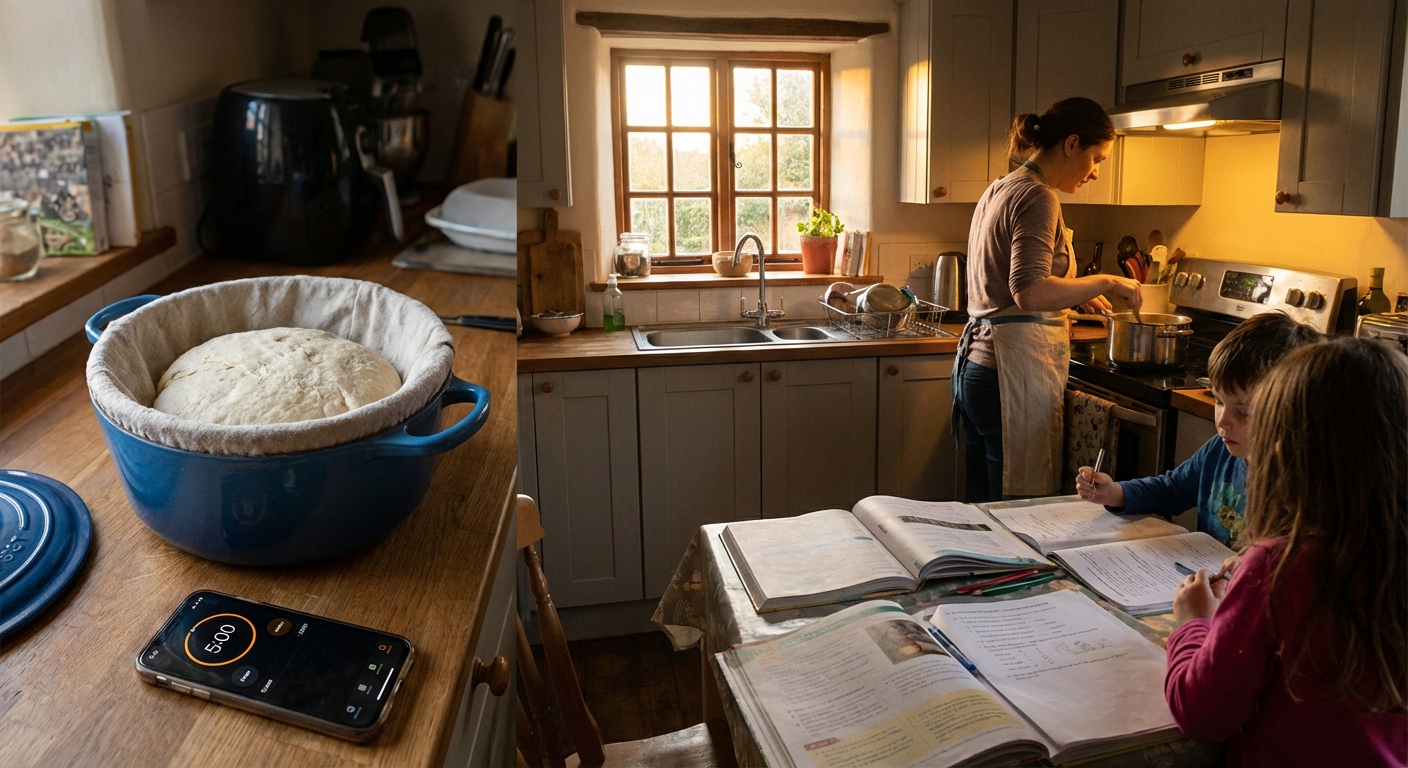
Cover bowl and leave at room temperature for 10–18 hours. The dough will double, become bubbly, and smell pleasantly yeasty.
Baking Day
Preheat the Dutch oven
Place the empty Dutch oven (with lid) in your oven. Preheat to 450°F (230°C) for at least 30 minutes.
Shape the dough gently
Lightly flour a sheet of parchment. Turn dough out onto it using a spatula. With floured hands, gently fold edges into the center a few times to form a rough ball. Don’t punch it down.
Final rest
Cover loosely with a towel and rest 30–45 minutes while the oven continues to preheat.
Bake with steam
Carefully remove hot Dutch oven. Use parchment as a sling to lower the dough into the pot. Cover with lid and bake 30 minutes.
Uncover and brown
Remove lid and bake another 10–15 minutes, until the crust is deep golden brown.
Cool completely
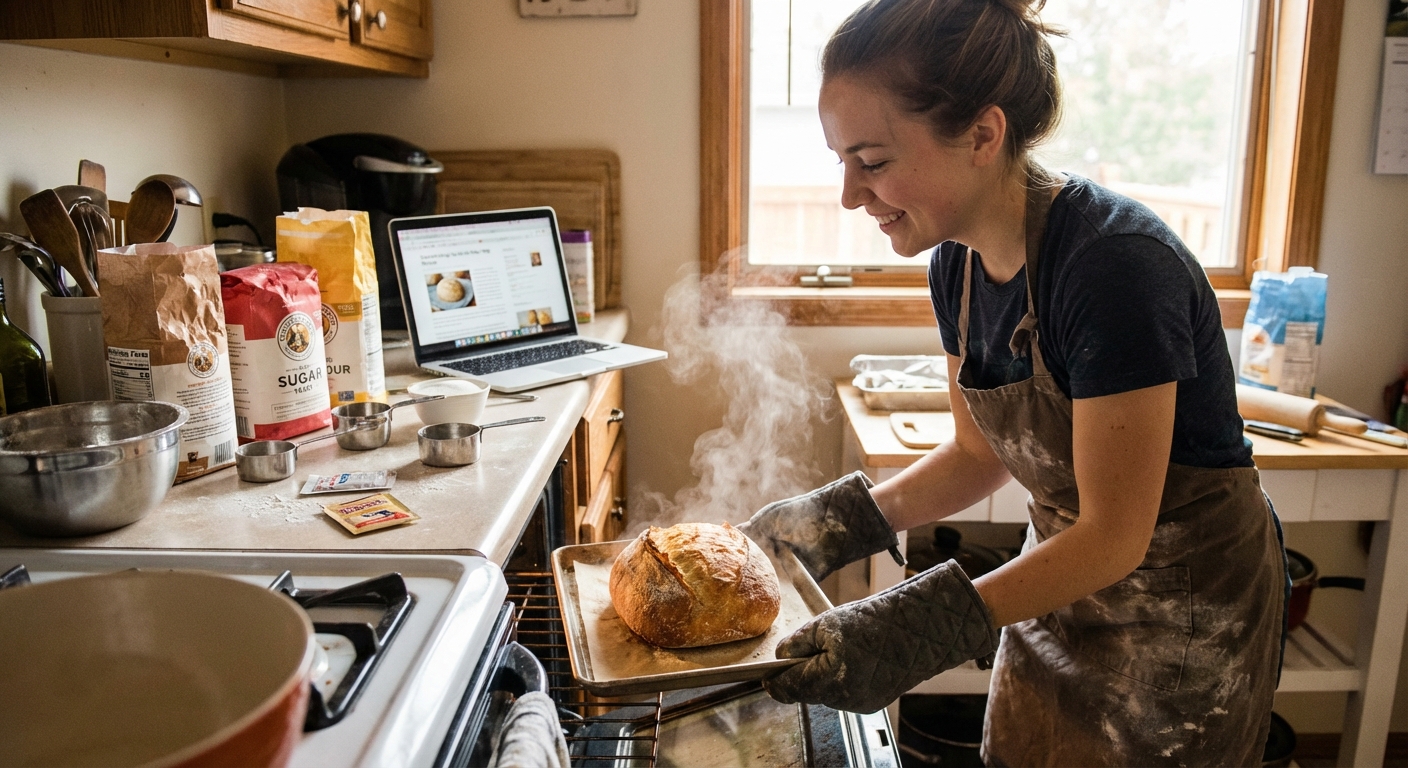
Lift bread out and cool on a rack at least 1 hour before slicing.
Chef Tip: Bread keeps baking as it cools. Slicing too early lets steam escape, making the interior gummy.
Flavor Pairing & Serving Ideas
- Dip in olive oil with salt, pepper, and herbs.
- Serve alongside soups and stews, especially tomato or bean-based.
- Toast with butter and flaky salt for the purest experience.
- Turn leftovers into croutons or garlic bread.
Recipe 2: Easy Same-Day No-Knead Sandwich Bread
Soft enough for sandwiches, sturdy enough for toast, and mild in flavor. This recipe is designed to be mixed in the morning and baked by afternoon.
Ingredients (1 standard loaf, 9×5-inch pan)
- 400 g (about 3 1/4 cups) bread flour or all-purpose flour
- 1 1/4 tsp fine sea salt
- 2 tbsp sugar or honey
- 2 tsp instant yeast (or 2 1/4 tsp active dry yeast)
- 280–300 g (1 1/4–1 1/3 cups) warm water (about 100–110°F / 38–43°C)
- 2 tbsp neutral oil or melted butter
- 2–3 tbsp rolled oats, seeds, or everything bagel seasoning for topping
Optional:
Step-by-Step Instructions
1. Mix the Dough
- In a large bowl, combine flour, salt, sugar, and yeast.
- Add warm water and oil. Stir with a spoon until a sticky dough forms and no dry pockets remain.
Dough should be soft and a bit tacky but not soup-like. Add a tablespoon of water or flour as needed.
2. First Rise (Bulk Fermentation)
- Cover the bowl and let rest in a warm place 45–60 minutes, until dough is puffy and roughly doubled.
- Halfway through, use a wet hand or spatula to gently pull one side of dough up and fold it over the center. Rotate bowl and repeat 3–4 times. This strengthens gluten without full kneading.
3. Shape for the Pan
- Lightly oil or spray a 9×5-inch loaf pan.
- Turn dough onto a lightly floured surface. Pat gently into a rectangle.
- Roll up the rectangle tightly from the short end into a log. Pinch seam and tuck ends under.
- Place seam-side down in prepared pan.
4. Second Rise
Cover loaf lightly and let rise 30–45 minutes, until dough crowns about 1 inch above the pan edge.
Meanwhile, preheat oven to 375°F (190°C).
If desired, brush top with a little water or milk and sprinkle oats or seeds.
5. Bake
Bake 30–35 minutes, until:
- Top is golden brown.
- Internal temperature reaches 195–200°F (90–93°C).
If the top browns too fast, tent loosely with foil.
6. Cool and Slice
Remove loaf from pan and cool on a rack at least 1 hour before slicing.
Flavor Pairing & Uses
- Perfect for sandwiches: turkey, grilled cheese, BLT.
- Ideal for French toast (slightly stale slices are best).
- Toasted with peanut butter and sliced banana for breakfast.
Chef Tip: Store at room temperature in a bread box or wrapped in a clean towel for 2–3 days. For longer storage, slice and freeze in a bag; toast straight from the freezer.
Troubleshooting Your No-Knead Bread
Bread didn’t rise much:
- Yeast old or inactive.
- Room too cool; give it more time.
- Underbaked; check internal temperature with a thermometer.
- Sliced too soon while still steamy hot.
- Oven not fully preheated.
- Bake a bit longer or increase temperature by 10–15°F next time.
Dense or gummy interior:
Pale crust:
Fit Bread Baking Into Your Rhythm
The key to making bread a regular part of your life is timing:
- Overnight loaf: Mix dough after dinner, bake the next day.
- Same-day sandwich bread: Mix in the morning, bake mid-afternoon, and it’s ready to slice by dinner.
Once you’ve baked a couple of loaves, you’ll see how forgiving and rewarding bread can be. Start simple, pay attention to how the dough looks and feels, and let the aroma of fresh bread tell you that you’re absolutely on the right track.
Key Takeaway
The most important thing to remember from this article is that this information can change how you think about Baking.